
Conservation
Safeguarding Verreaux’s Eagles: A Commitment to Conservation and Research
Verreaux’s Eagle Monitoring
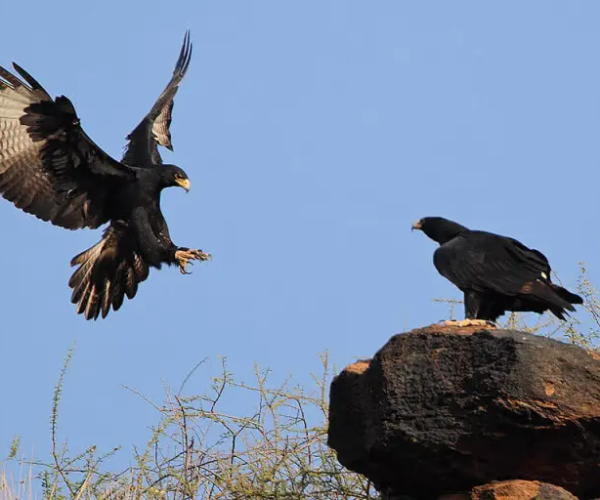
Rhenosterpoort Private Nature Reserve is proud to host a breeding pair of Verreaux’s eagles. These large birds of prey, also known as black eagles in southern Africa, are primarily found across the African continent. They inhabit kopje landscapes – rocky outcrops that are generally resistant to human disturbance. However, despite their minimal threat to livestock, Verreaux’s eagles are sometimes persecuted due to the mistaken belief that they prey on small farm animals.
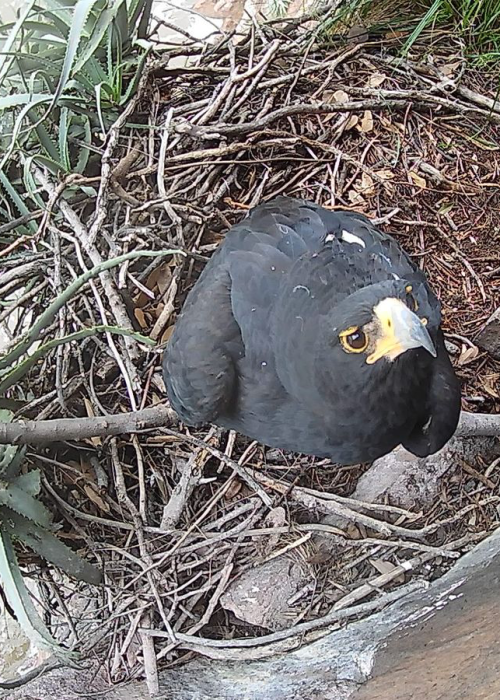
These eagles are diurnal and typically seen in mated pairs, often hunting together. Their diet consists primarily of Cape hyraxes and Yellow-spotted rock hyraxes. They are monogamous and mate for life, becoming highly territorial during the breeding season. Nests are built on cliffs—usually in overhung crevices, small caves, or occasionally on open ledges. Constructing a new nest can take up to four months, and the site is often marked by a characteristic‘whitewash’ from their droppings.
In southern Africa, egg-laying occurs between April and November. In a rare behavior among eagles, males may provide food for females before egg-laying and take on most of the food provisioning during incubation. Typically, two eggs are laid, though the range varies from one to three. Despite their dedication, Verreaux’s eagle nests have a relatively low success rate of 40–50% per year. The species has an estimated average lifespan of 16 years.
To support research on these magnificent birds, the Wits Bird Club, in collaboration with the Gauteng Verreaux Eagle Monitoring Group, runs a program to photograph and monitor nesting sites across the country. Rhenosterpoort proudly participates in this initiative by maintaining an online camera system to observe our resident breeding pair. Live images from the nest can be viewed by clicking <here>
Restoring Life to the Rivers: A Collaborative Milestone in Environmental Recovery
Fish Release to the Wilge and Oliphants River
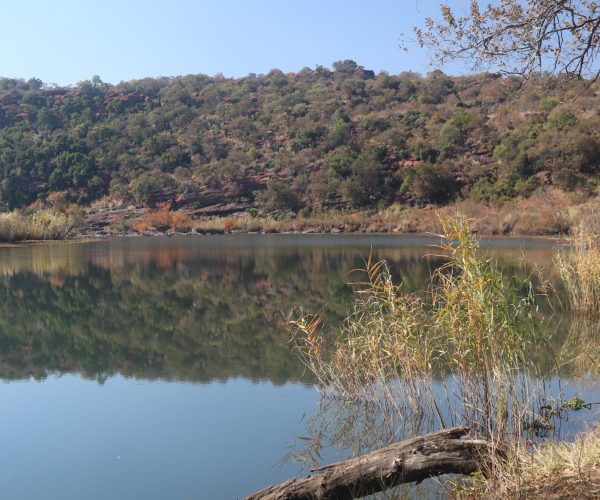
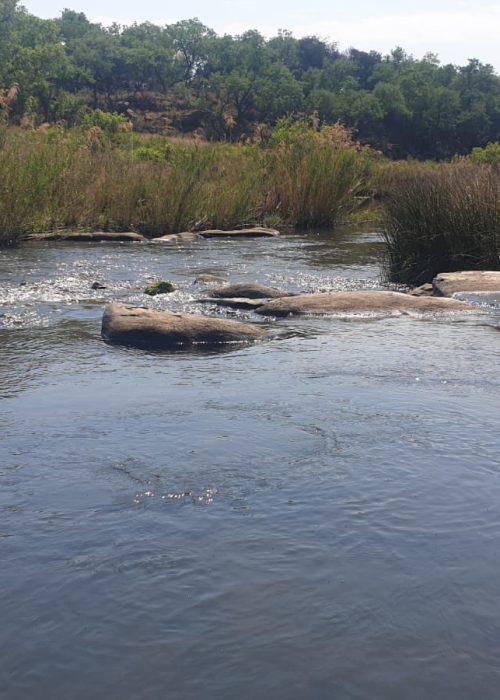
After two years of dedicated efforts to recover from a water overflow at Khwezela Colliery’s Kromdraai mine – just downstream from Rhenosterpoort, Thungela released the first fish to its natural habitat. This is a key achievement made possible through their partnership with Mpumalanga Tourism and Parks Agency (MTPA).
Under the leadership of aquatic scientists, the fish were carefully transported from the breeding facility to Ezemvelo Nature Reserve (our neighbours), returning them to their natural habitats in the Wilge and Olifants River. Steps have been taken to safely mark some of the fish so that they can track their progress. This initiative is notable as it is the first of its kind in South Africa following the recent incident. The project represents a significant milestone for the community and the environment, highlighting the importance of water quality and collaborative efforts.
The National Environmental Management: Protected Areas Act
Protected Area Status
Rhenosterpoort Nature Reserve (RNR) was informally established in the late 1960s and formally proclaimed as a nature reserve in 1973, covering 999 hectares. It is zoned as a Critical Biodiversity Area, making it a high conservation priority under both Gauteng and national strategies for protected area expansion. The National Environmental Management: Protected Areas Act of 2003 ensures its protected status, requiring specific management plans and agreements. The government provides fiscal incentives for landowners to protect biodiversity, such as property rates exemptions and income tax deductions. Additionally, the reserve is safeguarded against mineral prospecting and mining activities, with access to expert support from the Gauteng Biodiversity Stewardship Programme.